Showing posts with label historical clothing. Show all posts

Friday, September 6, 2019

Fashion Friday: The Kimono

Today when we say the word "Kimono" we visualize the brightly printed flowing gowns as traditional Japanese dress. But the Japanese word originally just meant clothing. Nothing fancy or special, just ki (wear) mono (thing) something you wear . The kimono evolved during the Heian period( 794-1192) in Japan when the straight-line cut method of sewing was developed. This technique involved cutting pieces of fabric in straight lines and sewing them together as opposed to the previous garments that usually consisted of two separate pieces of clothing. 

Iwasa Matabei - 1650
People began to wear their kimonos in layers during colder weather and over time they started to pay attention to how colors and patterns looked in combination together. Men and women both wore brightly colored kimonos. Sometimes the colors and patterns represented the seasonal time of year, sometimes it represented a person's social standing or political affiliation. Samurai warriors, for example, would wear a color or pattern that identified which feudal lord they served. 

Kimonos are typically hand-sewn into a “T” shape from 8 single straight cut pieces of fabric called tans and tied with an obi, or belt. Using single pieces or panels allows for easy repairs if one panel  gets faded or damaged. To make a kimono you need a piece of fabric 12 to 13 meters (39 to 43 feet) long and 36 to 40 centimeters (14 to 15 inches) wide and cut into eight pieces. These pieces are then sewn back together to create the basic form of the kimono. All of the fabric is used; none is thrown away. 


The obi (belt/sash), holds the kimono in place and keeps the front of the robe closed. Obi are about 4 meters (13 feet) long and 30 centimeters (12 inches) wide. There are two types of obi: Fukuro-obi, which have a design only on one side; and Nagoya-obi, which are narrower in the middle to make them easier to tie around the body. 

There are a few different styles of kimono and what one wears depends usually on gender and age. For example, unmarried girls were a kimono style known as Furisode (swinging sleeve), which has, as the name suggests, long flowing sleeves. Once a woman is married she wears a Tomesode, or short sleeved kimono.
Furisode
Boys wear a Haori,or half-coat kimono displaying his family crest, and flowing trousers called Hamaka underneath, while men where a straight sleeved longer coat called a Happi. (Haori are now becoming more popular among women and worn in place of a light coat or sweater)

There are specific kimonos for paying formal visits, for the hot summer season, and for causal and everyday wear. The patterns and colors of the kimono are what determines the formality and use. The bigger the pattern the more formal,  while smaller printed patterns are casual. Lighter colors are for spring while the winter season calls for dark bold colors like black and red. Performers such as actors and dancers wear Odori, which are very bold and brightly patterned so as to be seen from a distance. Solid black kimonos with a family crest or emblem are reserved for funerals and mourning. 

The kimono is no longer worn for every day dress in Japan. Today it is reserved for special occasions, tea ceremonies, festivals and particular events in a person's life. No matter when they are worn they bring back a sense of beauty, grace and artistry no longer found in today's clothing aesthetics. 


Want to learn more?! Here are a few books to check out!

The Book of Kimono: The complete guide to style and wear - Norio Yamanaka

The Social Life of Kimono: The complete guide to style and wear - Sheila Cliffe

Want to buy your own? Look Here!

Want to try your hand at sewing your own? Here's a WikiHow

Friday, March 23, 2018

Fashion Friday! The Chemise


che·mise
SHəˈmēz,SHəˈmēs
noun
  1. a dress hanging straight from the shoulders and giving the figure a uniform shape, popular in the 1920s.
    • a woman's loose-fitting undergarment or nightdress, typically of silk or satin with a lace trim.
    • a priest's alb or surplice.


  2. Today we take a look at an article of women's clothing known as the chemise or the shift. 

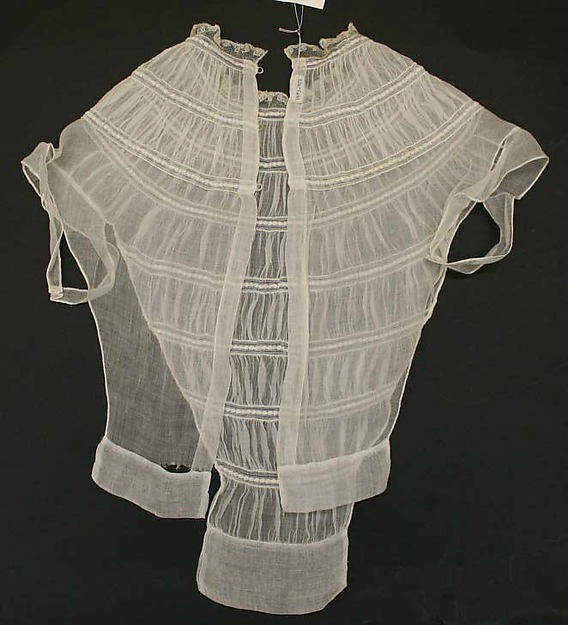
The Chemise most likely evolved from tunics which were garments worn by Greco-Roman men and women as well as Celtic men and women. Originally called a smock by the Saxons, the term became interchangeable with chemise, a Norman (French) word for a man's shirt. The word shift was used also but was considered a vulgar term used by lower classes. It was a loose fitting garment typically knee length worn next to the skin to provide a layer of protection to outer clothing from body oils and sweat. This helped to keep outer garments lasting longer since it reduced the need for washing.They were also worn as night gowns. Wealthy women might own several shifts, while poor, working or country women may have only owned one.

Materials used for the chemise varied from fine linen, holland, and cambric to cotton, and silk. Depending on the neckline of the dress, the chemise could have a high neckline with embroidery, lace or ruffles, or a low neckline that was not meant to be seen. They were almost always white. Sleeve and hem length also varied as the style of women's dress changed through out history. Some extant examples show bobbin lace or embroidery all the way down to the waist or along the seams to act as reinforcement. Sometimes they were heavily perfumed to help cover body smells or the smells from the laundering process.


Related image
                                                                                    Chemise pattern 

The chemisette was a "little chemise" used to fill in the neckline of a gown without the added bulk of a full chemise. 

Image result for chemisette
                                                                                       Chemisette

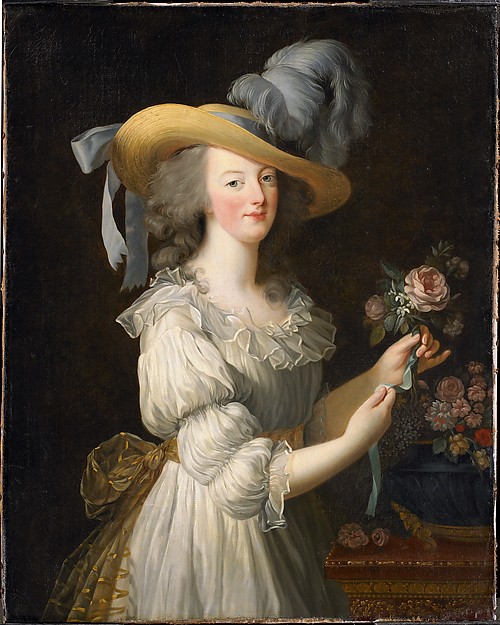
Queen Marie Antoinette of France shocked genteel society by allowing herself to be painted in a Chemise dress. This dress, also called chemise a la reine or gualle, was such a contrast to the normal attire of constricting, large hooped dresses worn at the French court. These dresses were made of light, gauzy muslin, tied with a sash around the waist and gave the impression that the wearer was in hardly more than her undergarments! These dresses were so thin that they garnered the nickname the Influenza Dress.

Marie Antoinette in a Chemise Dress, Élisabeth Louise Vigée Le Brun (French, Paris 1755–1842 Paris), Oil on canvas
                 Marie Antoinette in Chemise Dress Oil on canvas 1783 Élisabeth Louise Vigée Le Brun

The chemise took on many styles such as the princess chemise, or the empire chemise with a sloping front waist and puffy short sleeves. In 1877 a new style of combining a chemise and drawers together came on the fashion scene making the basic chemise outmoded. This garment could have a back or front opening and were worn to obtain the desirable female figure. By the mid 1900's the chemise was shortened into a vest-like garment but retained its original name. Also by this time it was no longer being worn as sleep wear. Separate garments known as pyjamas were the commonly worn clothing attire to sleep in.  

Today a modern chemise is still typically an unfitted, loose flowing women's undergarment. Chemise dresses are still in fashion as well and basically have the same form and function.
Image result for chemise


Further reading:

The History of Underclothes - C.Willett and Phillis Cunnington

Clothing Through American History: The Federal Era -Antebellum 1786-1860 - Ann Buermann Wass and Michelle Wenn Fandrich